The “Preloaded Bolts” option can be selected in the Steel Joints add-on.
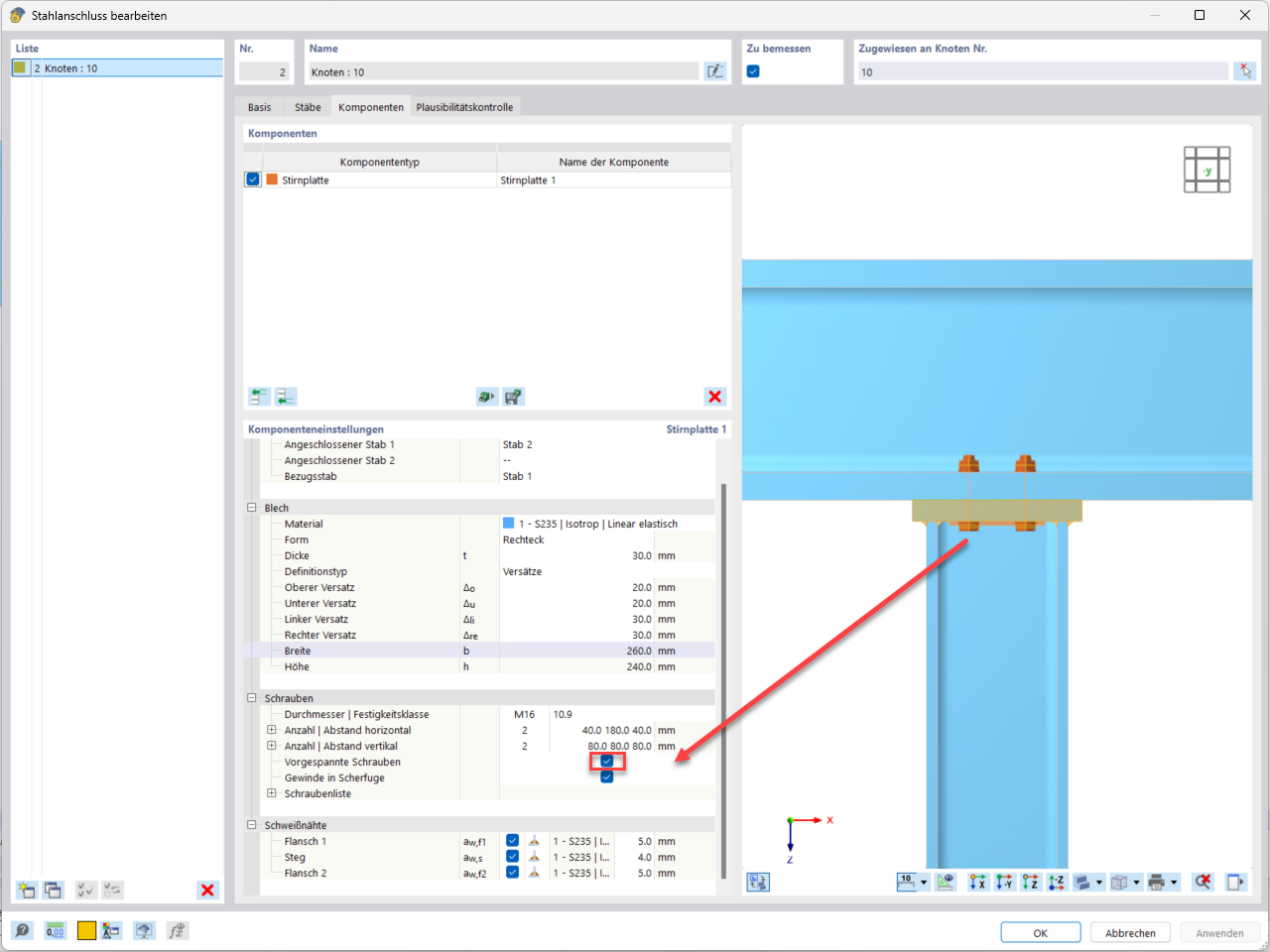
If this option is selected, the bolt is assigned the prestressing force Fp,C. In the analytical model, the so-called submodel, a prestressed connection is generated. When calculating the joint, the bolt tensile forces Ft,Ed, which result from the acting internal forces, are applied simultaneously with the prestressing force Fp,C.
As a result of the calculation, the bolt tension force is displayed as “Design tension force Ft,Ed” in the design check details. This is a value from the combined effect of the prestress and the acting internal forces, where the prestressing force is considered as an action.
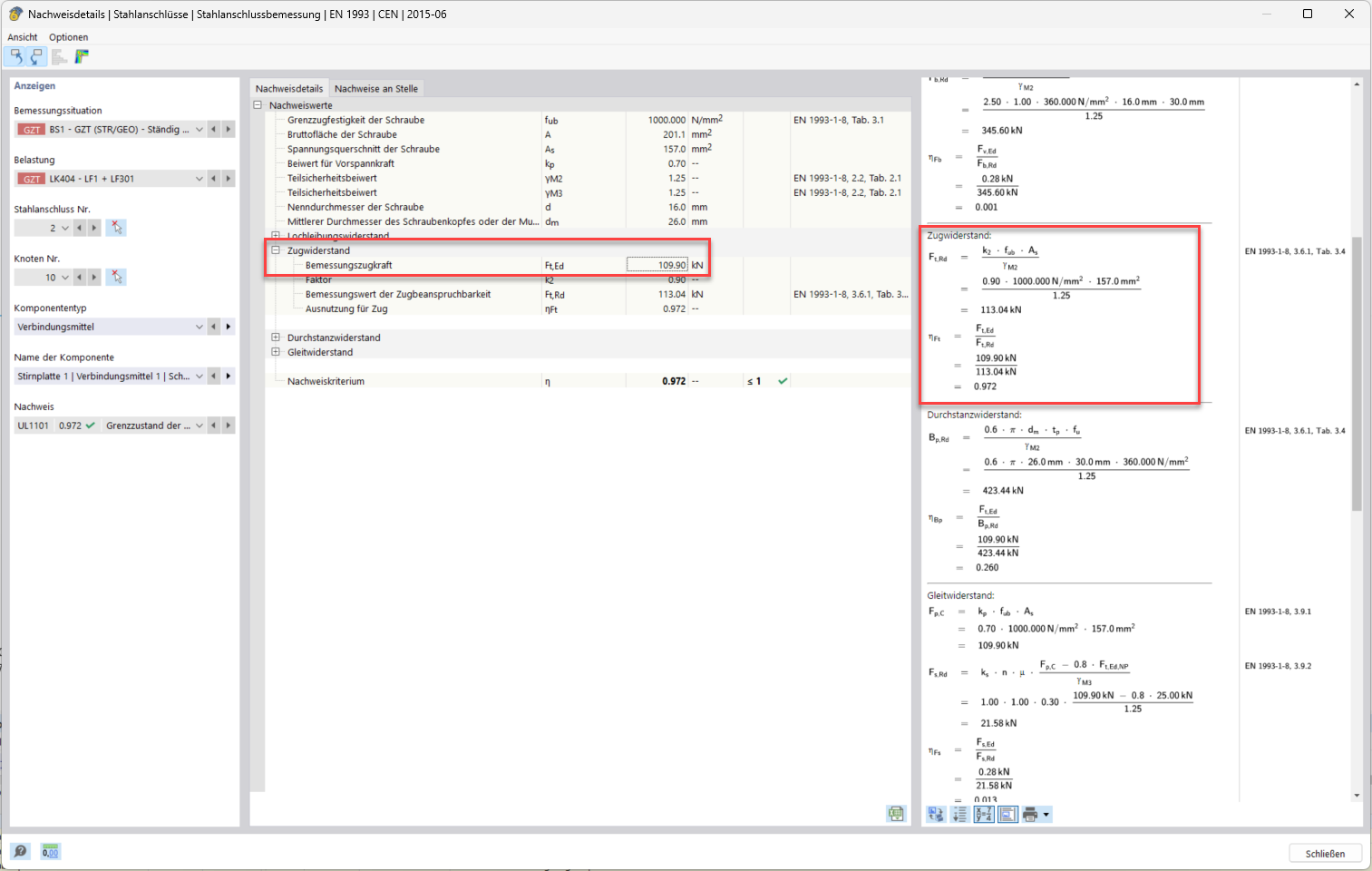
The utilization ratio of the preloaded bolt is obtained from the quotient of the above-mentioned design tension force Ft,Ed and limit tension force Ft,Rd. The degree of preloading is determined by the prestressing coefficient kp. With full preloading, the values for the utilization ratio of the bolt in tension are correspondingly high. However, this does not usually allow any conclusion to be drawn about the ratio between the acting tension force (without prestress) Ft,Ed,NP and the design tension force Ft,Ed.
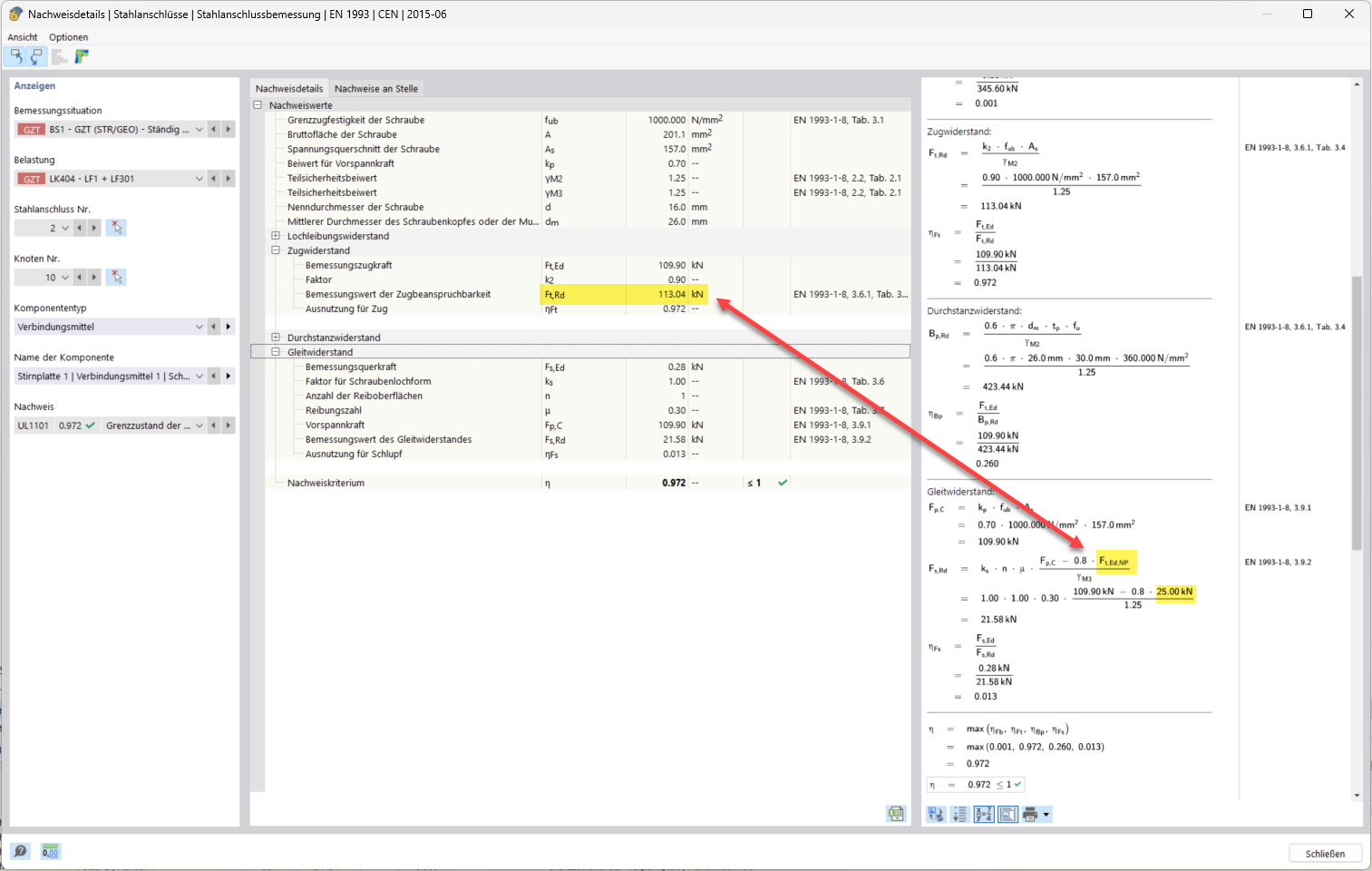
The following procedure is suitable for analyzing the load reserve of the bolt in tension: In the design check details for the sliding resistance, the tension force from the acting internal forces, calculated without prestress, is displayed with the designation Ft,Ed,NP. If you compare this value with the design value of the tensile strength Ft,Rd, you will get information about the load reserve of the bolt used.